
What Makes a Concept Album Work


Most concept albums fail in the same way. Not because the story is bad, but because the story and the songs are doing different jobs — and the listener can feel the seam.
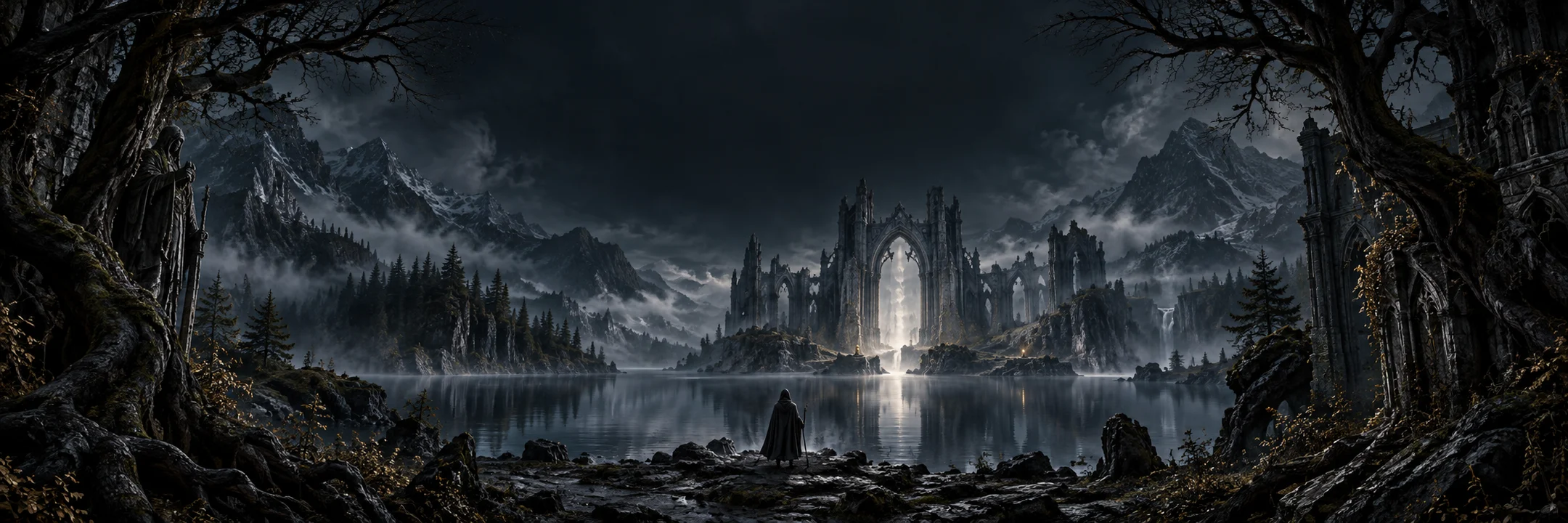
We spent four years making one. The Other Side follows a single character, the Wanderer, across thirteen chapters, from a storm at sea to whatever waits on the far side of the forest. Some of what we planned worked. A fair amount did not, and we rewrote it. Here is what we think actually separates a concept album that holds together from a collection of songs with a shared cover.
A concept is not a plot
The most common mistake is to start with a story and then try to write songs that narrate it. That produces exposition, and exposition does not sing.
Consider what a song is good at. It can hold one emotional state and explore it properly. It can capture a decision, a temptation, a loss, a moment of resolve. What it cannot do gracefully is explain that the protagonist travelled north for three days and met a merchant.
So the useful unit is not "chapter of a plot" but "emotional situation worth three minutes". When we wrote Sirens Call, the job was not to describe an encounter. It was to make the listener feel the pull of something beautiful and wrong. The plot is the excuse; the feeling is the song.
A good test: if you removed the album's story entirely, would this track still be about something? If not, it is a bridge, and bridges are where concept albums sag.
Every track has to survive alone
This is the discipline most concept records skip, and it is the one that matters most in practice.
Almost nobody will first hear your album from track one. They will find a song in a playlist, or a video, or because a friend sent it. If that song only makes sense as part twelve of thirteen, you have lost them.
So each chapter needs its own complete arc — its own hook, its own emotional payoff, its own reason to exist. The narrative should reward the listener who goes deeper, not punish the one who doesn't.
We wrote Avalon as a standalone song about the seduction of an easy answer. It is also, in the story, a specific door the Wanderer chooses to walk through. Both readings work. Neither depends on the other.
Use musical memory, not just lyrical callbacks
Lyrics are the obvious place to tie an album together — a repeated phrase, a name that returns. It works, but it is thin on its own, and it only reaches the listener paying close attention to words.
Musical recurrence is stronger, because it works on people who are not listening for it. A melodic motif introduced quietly in the second track and returned in full at the climax creates a feeling of arrival that most listeners will experience without being able to explain.
This is basic orchestral technique — leitmotif — and symphonic metal is unusually well suited to it, because you already have an orchestra capable of stating a theme in many different voices. The same eight notes can be a lonely oboe line early on and a full brass statement at the end, and the distance between those two versions is the story.
The closing track on our record runs over fifteen minutes in three movements — Dark Desire, Everlasting Love and Journey's End — and much of its weight comes from material the listener has already heard, returning transformed.
Sequencing is composition
Track order on a concept album is not an afterthought; it is the last and largest compositional decision you make.
Things worth watching:
- Key relationships between adjacent tracks. Two songs in the same key back to back can feel static. A deliberate shift can feel like movement.
- Tempo shape across the whole record. If tracks three through seven are all mid-tempo, the middle will drag regardless of how good each one is.
- Where the listener is allowed to rest. A record of thirteen climaxes has no climax. Memories exists partly so that what follows it lands harder.
We reordered our album several times late in the process. Nothing about the individual songs changed. The record got substantially better.
Let the ending mean something
The weakest concept albums resolve by simply stopping. The strongest ones earn their final minutes.
That does not require a happy ending, or even a clear one. It requires that the last track answers a question the first track asked. If your opener sets up a longing, your closer has to do something with it — satisfy it, deny it, or transform it into something the character did not expect.
Our record opens on Black Horizon, with someone alone against a storm, and ends fifteen minutes into a title track that has to decide what that person becomes. Whether we pulled it off is not for us to say. But the question was set on track one, deliberately, so that there would be something to answer.
The short version
A concept album works when the concept makes the songs better, and fails when the songs exist to serve the concept.
That is the whole test. If a track is there because the story needs a connective passage, cut it and let the listener fill the gap — they are better at it than you think. If a track is there because the story gave you an emotional situation you could not have arrived at otherwise, you have found the reason to make one of these at all.
You can follow the Wanderer chapter by chapter through the full story behind every track, or hear the whole journey on The Other Side.
Dream Map
Music from the other side.